
Don’t Let a Public Profile Cap Value
A quick gut‑check for brokers before buyers and renters make up their minds online.
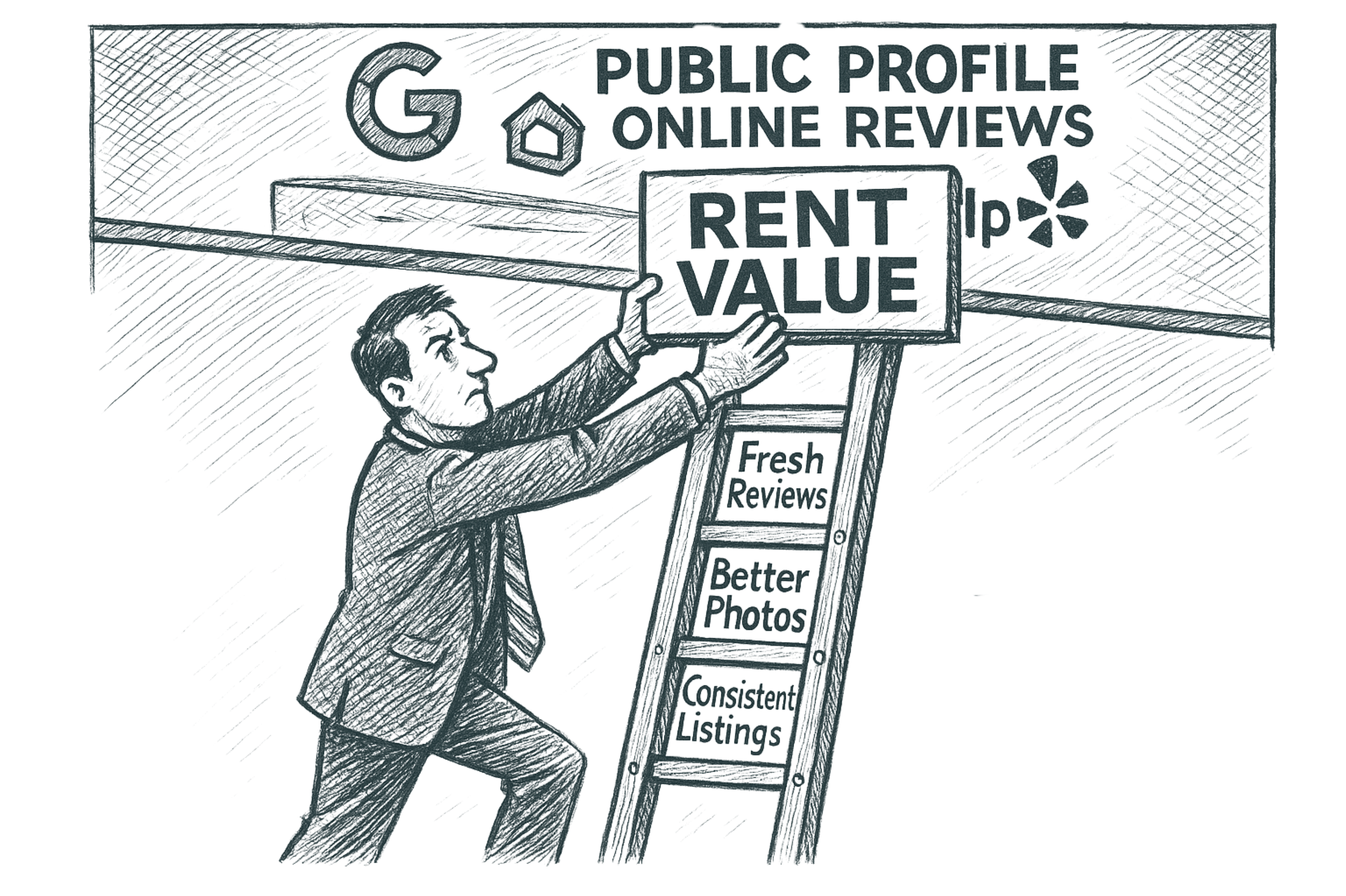
It happens more often than it should: a solid asset drags because the internet decided the story first. Three loud reviews, a tired photo set, and a stale Google listing can do more to compress pricing than any clever underwriting fix. I’ve watched committees pass on otherwise clean deals because the first page read like a caution sign. If a property is non-existent or at or below 3.5 stars on the big three, assume they’re paying a reputation tax—less traffic, slower absorption, and tighter buyer appetite.
1) The First Tour Is Online
The funnel begins on Google, carries through Apartments.com, and ends with service expectations set on Yelp. That’s where renters decide to click, and where buyers take the temperature. The short version: rating and recency drive discovery; specific public replies drive conversion; accurate, realistic visuals keep tours from falling apart. If those pieces aren’t working, the rent band narrows no matter what the comps say.
2) Getting Behind Means Staying Behind
Reputation compounds in both directions. When the top reviews are old or negative, you burn time and concessions to rebuild momentum. And the drag is sticky: fewer quality leads and more shitty leads means a weaker tour‑to‑lease rate and higher probabity of problem tenants. This shows up in weekly traffic reports, vacancy time, delinquency, admin, and turnover costs. That all shows up in buyer calls. The opposite is also true. A steady cadence of recent, specific reviews and visible fixes widens the achievable rent range and trims fallout between inquiry and tour. Treat this like curb appeal for the channel that decides who ever sees your curb.
3) What’s the Plan?
What owners and/or their PMs should be doing: Keep it simple and public. Review responses in plain language inside forty‑eight hours; acknowledge the issue, state the fix or policy, invite an offline conversation, and follow through. Tie maintenance complaints to a standard anyone can understand—acknowledge in two hours, resolve routine items in two to three days—and reference outcomes in the thread so the next person sees closure, not just the complaint. Refresh the visuals so the listing matches reality; a short vertical walkthrough does more work than a dozen wide‑angle hero shots. And clean up the listings so name, address, rent bands, fees, hours, and any specials match across Google, the ILS pages, and the property site. Inconsistency reads as indifference.
4) How to Use This for Your Owners
Show three screenshots—Google, Apartments.com, Yelp—side by side. Circle the gaps: stale reviews, repeated themes (noise, parking, maintenance), dated photos. Add a page to your presentation, or send one-off to an owner you’ve been calling: 90‑Day Reputation Plan. In your notes, connect actions to outcomes buyers care about: fresher reviews increase click‑through from Maps, specific replies reduce tour friction, realistic photos cut no‑shows, and a cleaner public narrative widens the rent band while trimming concessions. Same logic as curb appeal—just upstream.
Bottom line: Help shape the first five minutes of the online story and protect value. Pull a few listings this week and look at the first page with the same discipline you’d bring to the rent roll. If the picture is messy or dated, this is the fastest lever you have.
If a quick audit or a one‑pager (QR flyer, response frames, or an example 90‑day calendar) would be useful in a seller email or OM, say the word and I’ll share it.
Vendor Spotlight:
Sharon's Cleaning
They're always available, quick response time, great customer service and care about their quality of work. There's been multiple times we needed last minute cleaning and they have made themselves available.
(253) 332-6630
